Case Study · Startup · Automotive
Reducing Funnel Exit Rates by 84% Through HCD-Driven Redesign
As Senior Product Lead at SnoopDrive, I transformed a high-friction warranty quote funnel into a streamlined experience - cutting exit rates by 84%, reducing CS inquiries by 80%, and uncovering critical user insights through HCD sessions.
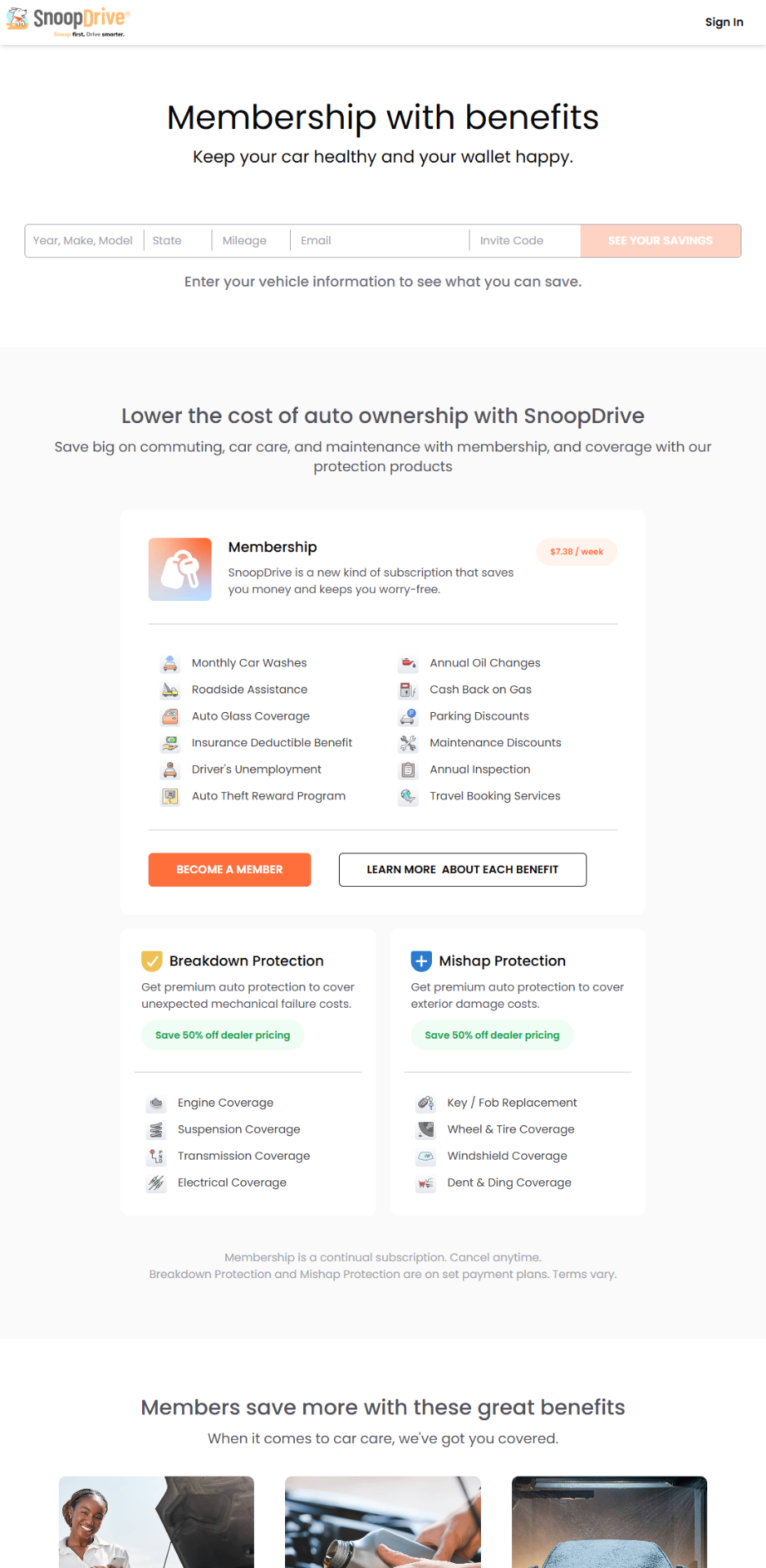
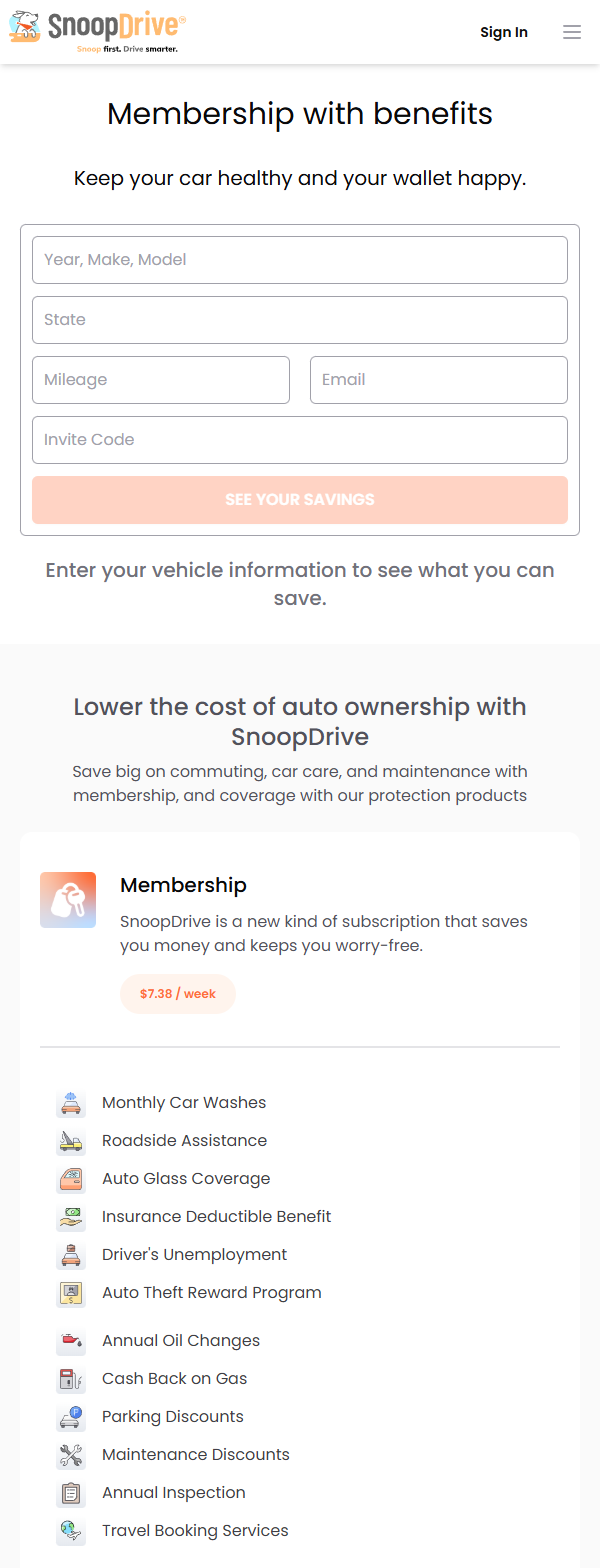
The startup context
SnoopDrive was an early-stage startup providing automotive warranty coverage at a fraction of dealership prices. As their first dedicated UX hire, I wore multiple hats - UX lead, HCD facilitator, researcher, and culture change agent - building design practices from the ground up.
"We're a start-up, so wearing multiple hats is a given."
The problem
The warranty quote funnel - SnoopDrive's primary revenue path - was hemorrhaging users. High exit rates and a flood of customer service inquiries signaled fundamental UX problems, but the team lacked the design maturity to diagnose or solve them.
Funnel exit rate
Critical
Users dropping off at alarming rates through the quote flow
CS scaling
Unsustainable
Support volume growing faster than the team could handle
"Why aren't we converting? Can we also use the team to explore a broader solution?"
My approach
I took a ground-up approach - bringing consistency to the web-based UX, evaluating platforms for quick-win optimizations, and guiding the team through their first exposure to human-centered design practices.
- Conducted stakeholder meetings and design sprints
- Defined user personas from existing user input and CS responses
- Mapped and optimized user flows end-to-end
- Implemented dynamic paths and progress indicators
- Reduced required information for initial quotes
- Evaluated endemic and non-endemic platforms for quick-win optimizations
- User interaction testing with Smartlook and rough prototyping
The "A-Ha" moment
Initial customer service data suggested plenty of user insights to be gained. Several HCD sessions I led uncovered a critical finding:
29% of all customer support questions dealt with the quote pages.
This validated a new OKR for the project and confirmed that the quote flow wasn't just losing users - it was actively confusing them badly enough to call support. This insight also spawned a separate, simultaneous CS optimization initiative.
Wireframing & prototyping
Significant changes included a shorter path, more intuitive interaction patterns, and substantially less required information to obtain an initial quote - collapsing a 6-step existing flow into a streamlined experience that holds up across desktop and mobile.
Building design culture
Beyond the product work, I was tasked with guiding the team through their early efforts of understanding human-centered design practices - creating culture change that embraces daily design thinking, testing and validating problem statement assumptions, and encouraging creative problem solving on a startup budget.
Results
Within 5 weeks of deployment, the redesigned funnel delivered dramatic improvements:
Funnel exit rate
−84%
Post-home funnel exit rate reduced by 84% within 5 weeks.
CS inquiries
−80%
Customer service inquiries dropped 80% within 3 weeks.
Path length
−2-3 pages
Shortened funnel with less required info for initial quotes.
Takeaway
All aspects of my UX experience were leveraged to produce a product that could be confidently handed to the permanent team for Phase III development. This project reinforced the value of HCD facilitation in startup environments - where user insights don't just improve the product, they can fundamentally redirect the business strategy.